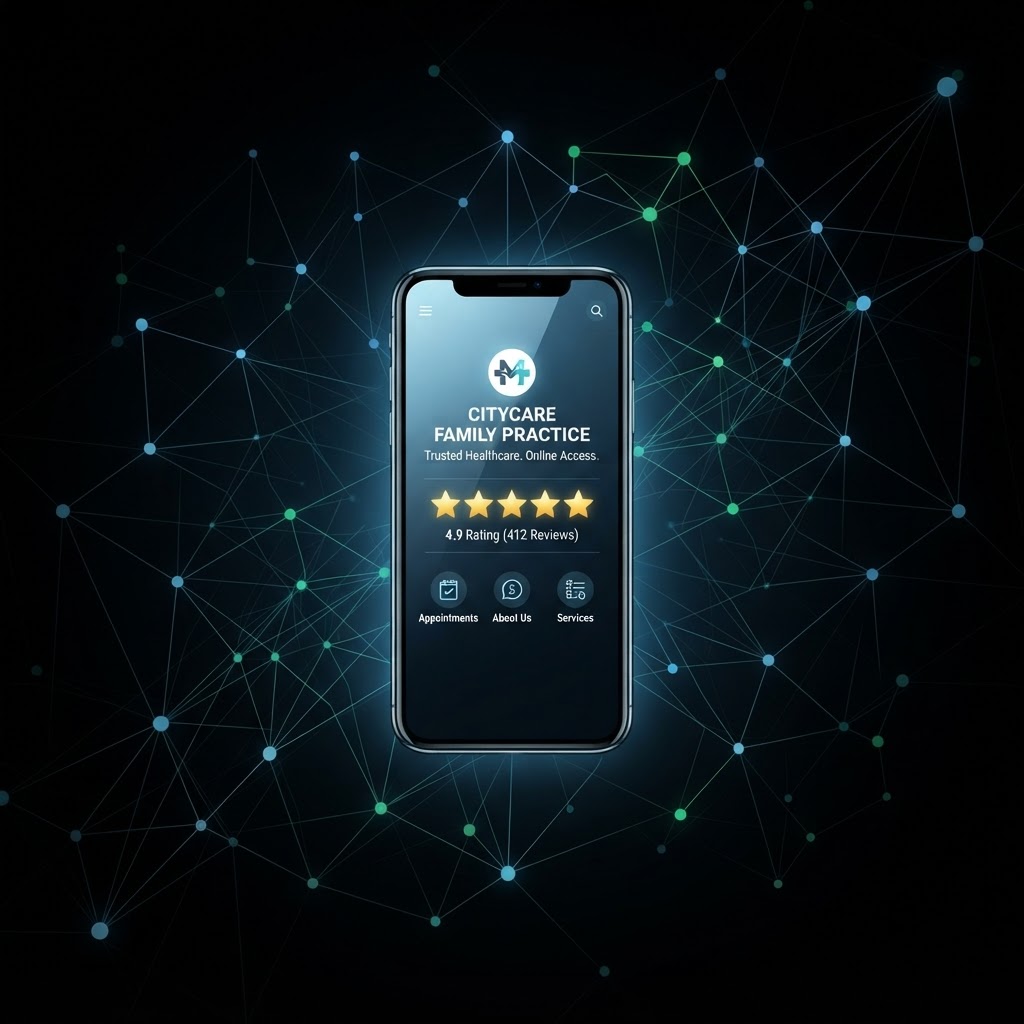
Most physicians still believe the patient journey starts with a phone call. It doesn't. It starts with a Google search, an Instagram profile, and a handful of reviews from strangers. By the time a patient picks up the phone, they've already formed an opinion about whether they trust you.
Research shows that over 80% of patients interact with a healthcare brand online before booking a consultation. That means your website, your social media, and your review profile aren't just marketing — they're the first consultation. And if that consultation goes poorly, you never get the call.
What Patients Actually See First
When a patient searches your name or specialty, they encounter a sequence of touchpoints before they ever reach your website. Google shows your Business Profile with reviews, photos, and hours. AI Overviews summarize your practice from whatever content exists about you online. Instagram and LinkedIn profiles surface in results, giving patients a window into who you are as a person, not just a credential.
Each of these touchpoints either builds trust or erodes it. A practice with a blank Instagram, three outdated reviews, and no website beyond a contact form sends one message. A practice with consistent educational content, recent patient reviews, and a clean professional site sends a very different one.
The problem isn't that most practices have bad online presences. It's that they have incomplete ones — and patients read the gaps as red flags.
The Three Things Patients Look For
1. Proof you're real and active. Patients want to see that you're currently practicing, not just listed. An Instagram with recent posts, a Google Business Profile with updated hours, and a website with content from this year all signal that you're active and engaged. Stale profiles feel abandoned.
2. Evidence you understand their problem. When a patient searches "knee pain specialist near me," they want to land on content that speaks directly to their concern. If your site only lists services and credentials, you're telling them what you do but not that you understand why they're looking. Educational content — even a few well-written articles — bridges that gap.
3. Social proof that others trust you. Reviews matter, but not in the way most doctors think. It's not about having a 5-star average. It's about having enough recent reviews that patients can read specific experiences and see patterns. Five detailed reviews from this month outweigh fifty generic ones from two years ago.
The Silent Cost of a Weak Digital Front Door
Every day, patients search for specialists in your area, evaluate what they find, and make a decision — often without you knowing they were looking. You don't lose these patients to better physicians. You lose them to physicians with better digital presence.
A dermatologist with an active Instagram and 40 recent reviews will out-book a dermatologist with a better clinical reputation but an empty online profile — every time. Not because patients can evaluate clinical quality (they can't), but because trust is built through what they can see.
The practices winning in 2026 aren't the ones spending more on marketing. They're the ones who treated their digital presence as the front door of their practice and kept it maintained.
What to Do This Week
You don't need a massive overhaul. Start with three things:
- Update your Google Business Profile. Add current photos, verify your hours, and respond to your last three reviews — even the positive ones.
- Post one piece of educational content. Answer the most common question your patients ask in a short article or social post. This gives searchers immediate value and signals expertise.
- Ask your last five happy patients for reviews. Not a mass request — just a personal ask after a good appointment. Fresh reviews matter more than total count.
Key Takeaways
- Over 80% of patients evaluate your practice online before they ever contact you
- The gaps in your digital presence read as red flags, not just missing information
- Active profiles, relevant content, and recent reviews build more trust than credentials alone
- You lose patients to practices with better digital presence, not necessarily better care
FAQ
How long does it take to improve a practice's online presence? Most practices see meaningful improvement in 30-60 days by focusing on Google Business Profile, content, and reviews. Full authority building takes longer, but the initial trust signals move quickly.
Do patients actually read reviews before choosing a doctor? Yes. Studies consistently show that over 70% of patients check reviews as part of their decision process, and the recency of reviews matters more than the star rating.
Is Instagram really necessary for medical practices? Not every platform suits every specialty, but Instagram specifically has become a primary search tool for patients under 40. If your target demographic uses it, your absence is noticed.
Your patients are already looking for you online. The question is whether they find a practice that feels trustworthy — or an empty profile that sends them to the next result. XPanseMed helps specialist physicians build the kind of digital presence that turns searches into appointments, without adding more to your clinical day.